Showing posts with label Japanese fashion. Show all posts

Wednesday, April 29, 2009

Their westernized styles in Japanese Fashion


All Japanese homes adhere to strict rules in regard to removing ones shoes before entering a house or room, and this is one custom the Japanese will not make allowance for just because you are a foreigner. Upon entering a private residence guests should take off their shoes at the entrance of the house known as the genkan. Slippers are then provided by the host or hostess, and are to be worn for the duration of your visit. There are two exceptions to this practice. Upon entering a room furnished with a tatami floor, slippers are removed, as tatami mats should only be tread upon in socks or bare feet. The second exclusion to the rule is when you enter the washroom of the home. Slippers are again removed and left outside the door in exchange for a pair designated for the bathroom.
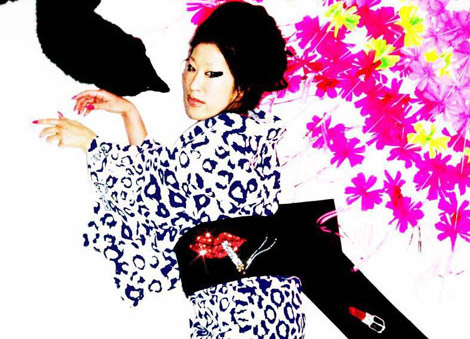


Even though most Japanese homes are now furnished with western style sofas and chairs, there still may be an occasion when you will be required to sit on the floor in the traditional Japanese fashion, especially in large family gatherings where meals are often held sitting on the tatami floor around a low table. The formal way of sitting for both men and women is known as “seiza”, which is basically a kneeling position where the legs are tucked under as you rest on knees, legs, and feet. Foreigners however are not expected to to sit in seiza for long periods of time, and many Japanese because of their westernized life styles are no longer attempting this uncomfortable position as well. Therefore a more casual style has been adopted. Men usually sit cross legged, while women sit on their knees laying both legs to one side. The former position is considered exclusively male, while the latter is to be used by women only.


Although it is not entirely necessary and will not be expected, it is also customary in Japan when visiting someones home to bring a small gift known as “temiyage”. This does not need to be an extravagant present, something as simple as a bag of fruit or a bottle of sake, as more than anything it represents your appreciation for being invited.

Monday, April 27, 2009

I Learned A Little Japanese


You can learn Japanese for many reasons. An ancient culture, a thriving economy, interesting people, and splendid landscapes are some of the things the Land of the Rising Sun has. A hop to Japan must persuade you if this list doesn't. But first, the list.

There are various reasons why you must visit Japan and learn Japanese. It may be the booming economy, gorgeous landscapes, ancient culture, or lovely people. If you still require persuasion, this list will likely do the trick.

Akira Kurosawa - Director Extraordinaire

You have missed out on the best movies of all time if you have not seen Akira Kurosawa's art works. The sweeping landscapes, exciting scenes, painstaking attention to detail, amazing stories, and timeless appeal make his movies - Seven Samurai, Ran, Throne of Blood, and Dreams, to name some - a requirement for any serious film buff. And since most of his films are in his native language, you should learn Japanese to watch them in all their pure glory.

Japanese Anime

Arguably, Japanese anime isn't for everyone. The common attributes of anime - exaggerated physical attributes, speech bubbles, and onomatopoeic typography - can be strange when you're used to conventional cartoons. However, it does possess unique characteristics such as adorable creatures and gripping storylines. Consider Dragon Ball Z and Naruto, and you will have a very good idea of why you have to study Japanese.


Chindogu, A Japanese Art

Of the various Japanese art forms such as origami, ikebana, and tea ceremony, the chindogu is the most interesting. This art form is all about creating everyday gadgets with noble intentions, but end up being useless anyway. In fact, these items only ever bring on the giggles as an achievement.

Do you want to keep your hair away from your noodles with a hairguard? How about a tissue dispenser atop your head as a hay fever hat? These could actually be profitable, weirdly enough. Learn Japanese to talk to the inventors.


Japanese Cuisine

Japanese food needs plenty of attention to detail and effort, even if it might look very simple on the surface. Study Japanese to prepare Japanese food the right way. This way, you'll be able to easily understand the words used and know the names of the dishes.


Japanese Fashion

Even New York can't top the garish street fashion of Japan. You will love the avant garde costumes like Kogals, Bosozoku, Lolitas, and Ganguros worn by young people in Tokyo.

The world's fastest growing economy is also the Japanese one. The third largest Internet users all over the world are also the Japanese. Consider the business opportunities that the country has to give. This should be reason enough to learn Japanese.

And if these reasons are not sufficient for you to learn Japanese, go for the Japanese being the third largest Internet users, and Japan being the fastest rising economy in the world. You can take advantage of Japan's business opportunities.

Monday, December 15, 2008

The Eternal Fashion - japanese style

Many would say that fashion is an expression of the culture and soul, hence every nation has a unique reflection of its own history as well as traditions in one way or another.

Japanese fashion is no exception to this sentiment. This article will go into a few details of how it has changed throughout the years while always remaining intact in its traditions.

The Past and the Present

One of the most traditional and common Japanese fashion outfits is the Kimono; it is still worn today in more modern designs, it was also embraced by the Western nations because of its sensuality as well as elegance.

Throughout the years Japanese fashion saw very few changes but throughout the years the Kimono was a dominant part of the classic collection and consistently a part of their lives in one form or another. Another kind of Kimono is the Furisode which is worn by young women in their twenties; in Japan the age to legally drink and smoke is twenty and in order to celebrate the parent frequently offer their daughters a Furisode.

Then the Houmongi takes the stage. This is another kind of Kimono that is worn by married women and similar to the Furisode the parents will give their daughter one when she is married.

The formal Kimono is known as Tomesode and is typically worn by married women to social functions such as marriages. Additional variations include the Mofuku which is the funeral Kimono for Japanese fashion and the Uchikake is the wedding Kimono.


Last but certainly not least the Obi is the oldest form of the Japanese fashion as they are no longer in production today and rarely will you find someone wearing this type even in Japan.


Modern Japanese fashion generally has several categories in addition to some that are not related to clothes. The Japanese fashion known as the Kogal is translated in Japan to people who enjoy displaying their higher income by wearing expensive jewelry or clothes.

The Gangoro Japanese fashion is designed for those people who began changing their hair color and then you have the Lolita as the Gothic Lolita Japanese fashion, which is being represented by the innocent and sweet dressed (Lolita) all the way to the other extreme type referred to as punk fashion, which is known as Gothic Lolitas.

The Eternal Fashion

The world of classic fashion is eternal throughout the world and Japanese fashion has their Kimonos to prove it. The use of colors also plays a large part in the world of Japanese fashion as well as their culture as it is directly correlated to the event. Fashion not only reflects and defines an era and a place in time but also the character and personality of the person who is wearing it.

PayPal

Sign up for PayPal and start accepting credit card payments instantly.

Followers

Blog Advertising - Advertise on blogs with SponsoredReviews.comBlog Ads
Msn bot last visit powered by MyPagerank.NetYahoo bot last visit powered by MyPagerank.Net